
Your Garage Door Shouldn't Sound Like That
You press the button, and instead of a smooth, quiet operation, your garage door greets you with a symphony of grinding, squealing, or banging. If you live in Edmond and your garage door has started making noises it never used to make, you're not alone — it's one of the most common concerns we hear from homeowners.
The good news is that most garage door noises point to identifiable, fixable problems. The bad news is that ignoring them usually makes things worse — and more expensive. Let's walk through the most common garage door noises, what they mean, and what you should do about each one.
Squealing or Screeching Sounds
A high-pitched squeal when your garage door opens or closes is one of the most common complaints. It's also one of the easiest to address in many cases.
What Causes It
- Lack of lubrication. Metal rollers, hinges, and springs all need periodic lubrication to operate smoothly. Oklahoma's temperature swings — from freezing winters to blazing summers — can dry out lubricant faster than you'd expect.
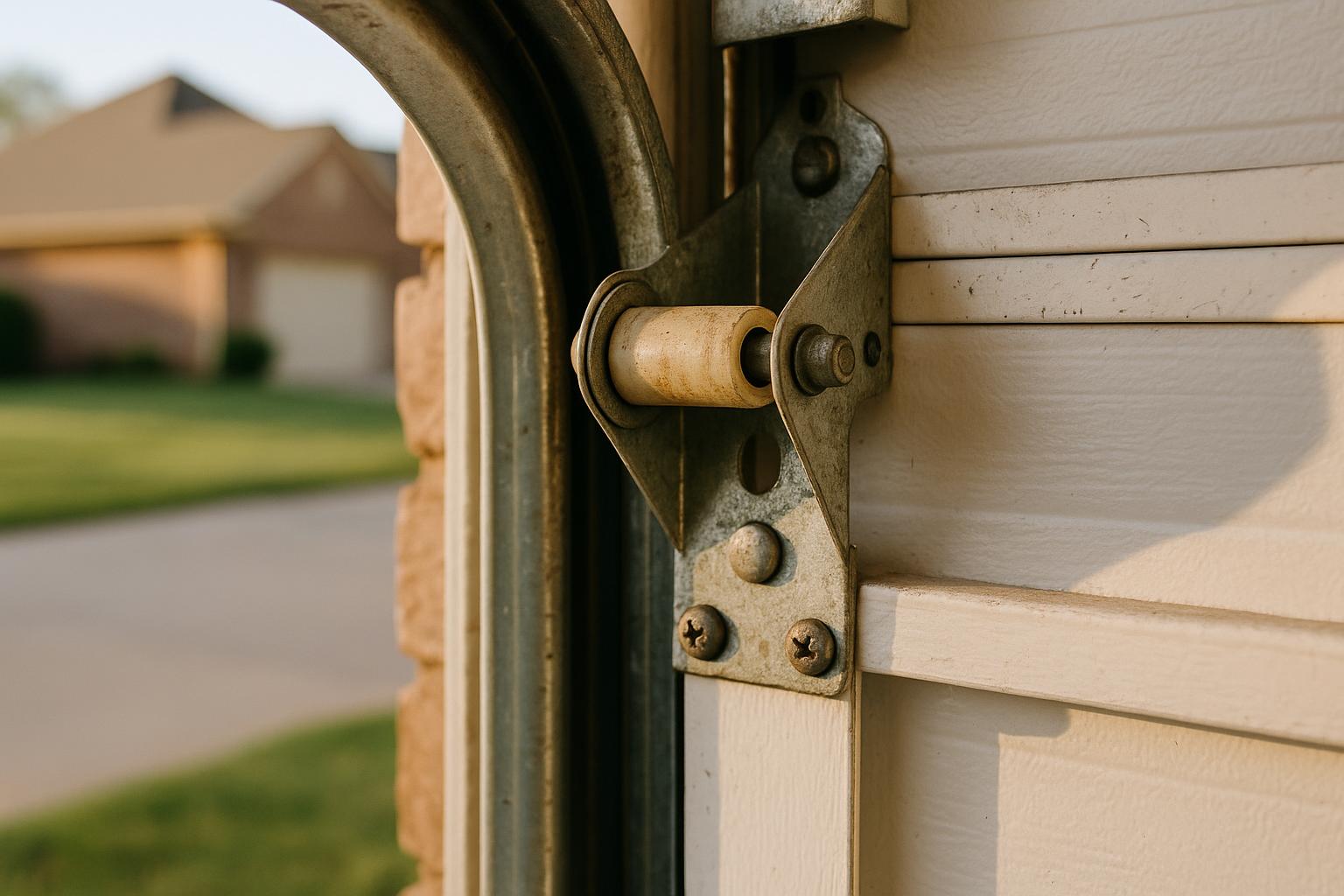
- Worn rollers. If your door uses metal rollers without nylon coatings, they can wear down over time and create metal-on-metal contact with the tracks.
- Misaligned tracks. When the tracks aren't perfectly aligned, the rollers drag against the sides, producing a squealing or scraping noise.
What to Do
Start by applying a garage door-specific lubricant (not WD-40, which is a solvent, not a lubricant) to the rollers, hinges, springs, and bearing plates. If the noise persists, the rollers may need to be replaced, or the tracks may need adjustment. If you're not sure what you're dealing with, a quick inspection from a professional can save you a lot of guesswork.
Grinding or Scraping Noises
A grinding sound is harder to ignore — and for good reason. It usually means something is rubbing where it shouldn't be.
What Causes It
- Bent or damaged tracks. Even a small dent in a track can cause the rollers to grind as they pass over the damaged section.
- Worn-out gears in the opener. If the grinding seems to come from the ceiling-mounted opener unit rather than the door itself, the drive gear inside the opener may be stripped or wearing down.
- Debris in the tracks. Dirt, leaves, small rocks, and even insects can accumulate in garage door tracks, especially here in Edmond where wind blows in all kinds of debris.
What to Do
Inspect the tracks visually for dents, bends, or obstructions. You can carefully clean out debris with a cloth, but don't try to bend tracks back into shape yourself — that's a job for a technician with the right tools. If the grinding is coming from the opener, it likely needs a gear replacement, which is a straightforward repair for a professional but not a great DIY project.
Popping or Snapping Sounds
A loud pop or snap when the door starts moving can be startling. It can range from harmless to serious depending on the source.
What Causes It
- Torsion spring tension shifting. As torsion springs wind and unwind, they can occasionally make a popping sound, especially if they haven't been lubricated recently.
- Loose hardware. Nuts, bolts, and brackets can loosen over time due to the constant vibration of daily use. A loose hinge or bracket can pop or snap as the door moves through its cycle.
- Panel joints flexing. On older doors, the joints between panels can develop play, causing a snapping sound as the door bends along the track curve.
What to Do
Lubricate the springs and check for any visibly loose hardware. You can carefully tighten bolts on hinges and brackets with a socket wrench, but never attempt to adjust anything connected to the torsion springs. These are under extreme tension and can cause serious injury. If the popping is persistent or loud, have a technician take a look.
Rattling or Vibrating Sounds
A rattling garage door often sounds worse than it is, but it still deserves attention.
What Causes It
- Loose chain or belt on the opener. Chain-drive openers are naturally louder than belt-drive models, but a loose chain will rattle significantly. Belt-drive openers can also develop slack over time.
- Loose nuts and bolts. The repetitive motion of a garage door going up and down thousands of times a year will gradually loosen fasteners throughout the system.
- Worn roller stems. When the stems that hold the rollers in the hinges become worn, the rollers wobble inside the track and create a rattling vibration.
What to Do
Tighten all visible nuts and bolts on the door and the track brackets. Check the opener chain or belt for proper tension according to your owner's manual — most should have about a half-inch of play at the midpoint. If the rattling continues, worn rollers or hinges may need replacement.
Banging When the Door Closes
If your garage door slams shut the last few inches instead of closing gently, something is off with the balance or the opener settings.
What Causes It
- Broken or weakening springs. When springs lose tension, they can no longer counterbalance the door's weight effectively. The door becomes too heavy for the opener to control smoothly on the way down.
- Opener force settings. The close-force setting on your opener may be set too high, causing the door to come down harder than necessary.
- Disconnected or damaged cables. Lift cables work with the springs to control the door's movement. A frayed or loose cable can cause the door to drop unevenly.
What to Do
This one warrants professional attention, especially if springs or cables are involved. A door that's slamming shut is a safety hazard — it can damage the door, the floor, and anything (or anyone) in its path. Call a garage door technician to assess the spring balance and cable condition.
When to Call a Professional
Some noises are simple maintenance issues you can handle yourself with a can of lubricant and a wrench. Others are warning signs of a bigger problem. As a general rule, call a professional when:
- The noise is sudden and dramatically different from normal operation
- You notice the door moving unevenly or struggling to open
- Any component appears visibly broken, frayed, or bent
- The noise involves the springs, cables, or the opener's internal mechanisms
At Edmond Door & Opener, we help homeowners across Edmond, Deer Creek, Piedmont, and the surrounding Oklahoma City metro area diagnose and fix noisy garage doors every day. We'll tell you exactly what's going on, what needs to be fixed, and what can wait — no pressure, no upselling.
Don't Wait Until a Noise Becomes a Breakdown
Garage door noises are your door's way of telling you something needs attention. Catching a problem early — a dry hinge, a loose bolt, a wearing roller — is almost always cheaper and simpler than dealing with a full breakdown later. If your garage door has started making sounds that don't seem right, give us a call or schedule an inspection. We'll get it quiet and working smoothly again.