
When Your Garage Door Jumps the Rails
Your garage door glides up and down on a pair of metal tracks mounted to the walls of your garage. When everything is aligned and working properly, you barely think about it. But when a door comes off track — even slightly — it can jam, hang at an angle, or refuse to move at all.
An off-track garage door is one of the more common service calls we get here in Edmond, and it's also one of the most important to address quickly. A door that's partially derailed is under enormous tension and can cause serious injury or property damage if someone tries to force it open or closed.
Here's how to tell if your garage door has come off its tracks, what causes it, and what you should (and shouldn't) do about it.
Signs Your Garage Door Is Off Track
Sometimes the problem is obvious — the door is visibly crooked or stuck halfway. Other times, the signs are more subtle. Here's what to watch for:
- The door looks uneven or tilted. One side sits higher than the other when the door is closed or partially open.
- You hear scraping or grinding sounds. Metal-on-metal noise when the door moves usually means the rollers aren't sitting properly in the tracks.
- The door hesitates or gets stuck. It may move partway up or down, then stop or jerk.
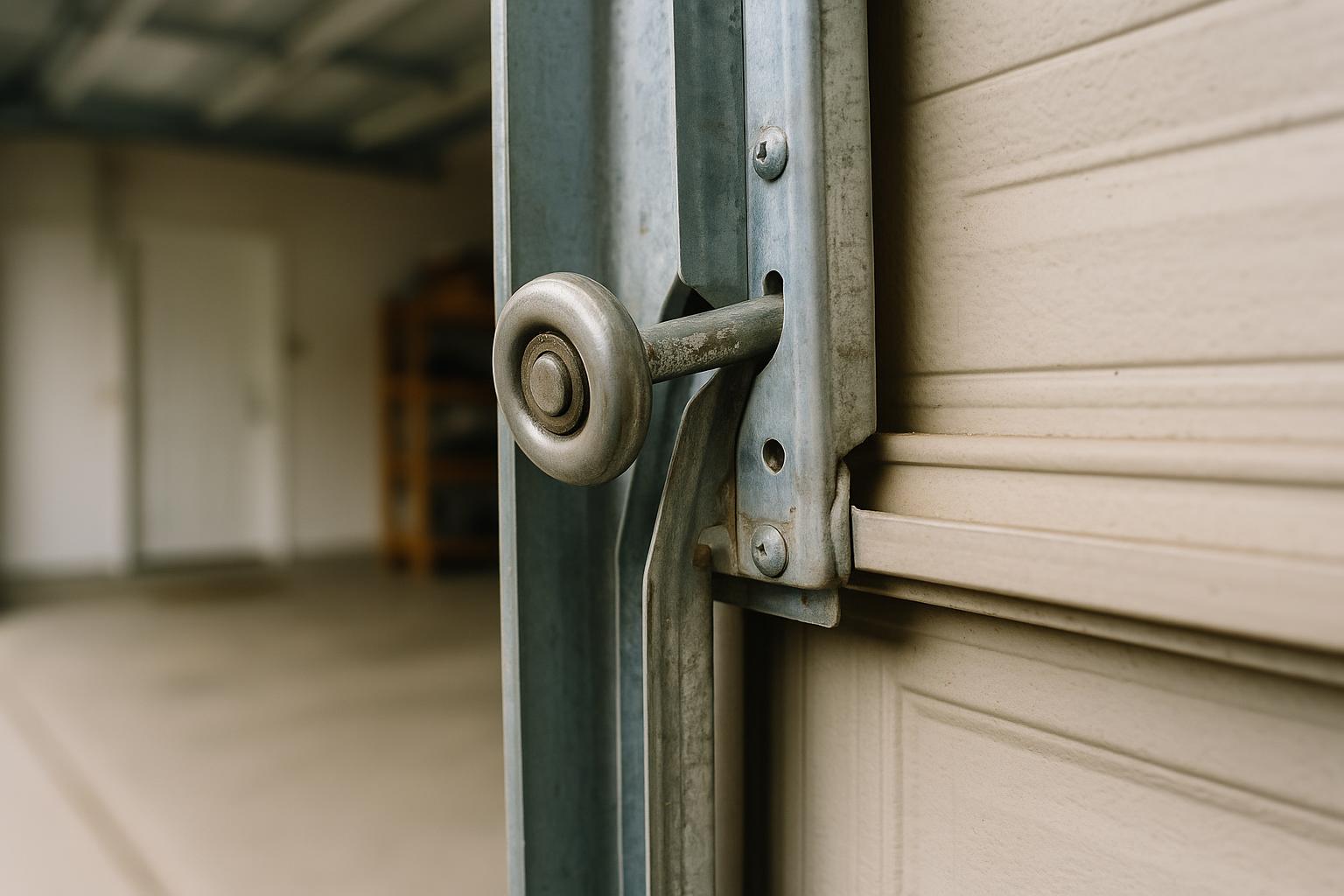
- Visible gaps between the rollers and the track. If you look at the tracks on either side of the door, the rollers should be seated inside them. If you see a roller poking out or hanging loose, the door is off track.
- The door won't close flush with the ground. A gap on one side at the bottom is a telltale sign of a tracking issue.
What Causes a Garage Door to Come Off Track?
There are several reasons this happens, and understanding the cause can help prevent it from happening again.
1. Impact or Collision
This is the most common cause we see. Someone backs into the door with a vehicle, a kid hits it with a basketball, or something falls against it from inside the garage. Even a minor impact can bend a track or knock a roller out of alignment.
2. Worn or Broken Rollers
Garage door rollers wear out over time. Nylon rollers crack, and steel rollers can lose their bearings. When a roller breaks or wears down, it can slip out of the track and cause the door to derail.
3. Misaligned Tracks
The vertical and horizontal tracks need to be precisely aligned for the door to travel smoothly. Over time, vibration, settling of the house, or loose mounting brackets can cause the tracks to shift. This is especially common in older homes around the Edmond area where garages may have seen decades of daily use.
4. Broken Cables or Springs
Your garage door's cables and springs work together to lift and lower the door in a controlled way. If a cable snaps or a spring breaks, the door can drop suddenly or move unevenly, pulling the rollers out of the tracks on one side.
5. Obstruction in the Track
Dirt, debris, small rocks, or even a stray bolt can get lodged in the track and force the rollers out of their path. It doesn't take much to cause a problem — garage door tracks have tight tolerances.
6. Lifted Horizontal Track
The horizontal tracks that run along the ceiling of your garage are supported by brackets and hangers. If one of those supports loosens or fails, the track can sag or shift, causing the door to derail at the top of its travel.
What to Do If Your Garage Door Is Off Track
If you suspect your door has come off its tracks, here's the right way to handle it:
Stop Using the Door Immediately
Don't try to open or close it with the opener or by hand. Forcing a derailed door to move can bend the tracks further, snap cables, or cause the door to fall. A standard residential garage door weighs between 130 and 350 pounds — that's not something you want coming down unexpectedly.
Disconnect the Opener
If the door is partially open, pull the emergency release cord (the red handle hanging from the opener rail) to disconnect the door from the automatic opener. This prevents the opener from trying to move the door and making the situation worse.
Don't Try to Fix It Yourself
We understand the temptation. You can see the roller sitting outside the track, and it seems like you could just pop it back in. But garage doors are under significant spring tension, and attempting to realign a door without the right tools and training is genuinely dangerous. Every year, DIY garage door repairs send thousands of people to the emergency room nationwide.
Call a Professional
A trained technician can safely assess the situation, determine why the door came off track, realign the rollers, and repair or replace any damaged components. In most cases, an off-track repair is a straightforward service call that can be completed the same day.
Can You Prevent Your Garage Door from Going Off Track?
You can't prevent every possible scenario, but regular maintenance goes a long way toward keeping your door on track — literally. Here are a few things that help:
- Schedule annual maintenance. A yearly tune-up includes inspecting rollers, tracks, cables, and springs for wear. Catching small problems early prevents bigger ones later.
- Keep the tracks clean. Wipe down the inside of the tracks a couple of times a year to remove dirt and debris. You don't need to lubricate the tracks themselves — just keep them clear.
- Lubricate the rollers and hinges. A silicone-based garage door lubricant applied to the rollers, hinges, and springs twice a year keeps everything moving smoothly and reduces wear.
- Check the track brackets. Give the brackets that hold the tracks to the wall a visual inspection now and then. If you see any that look loose, tighten them or have a technician take a look.
- Be mindful of the door. It sounds simple, but paying attention when you're pulling in and out of the garage prevents the most common cause of off-track doors — accidental impacts.
What Does an Off-Track Repair Typically Involve?
When we handle an off-track service call in Edmond or the surrounding areas like Deer Creek, Piedmont, or Oklahoma City, here's generally what happens:
- We inspect the door to determine what caused it to derail.
- We check the tracks for bends, dents, or misalignment.
- We examine the rollers, cables, and springs for damage.
- We carefully realign the door and reseat the rollers in the tracks.
- We straighten or replace any bent track sections.
- We replace any broken rollers or damaged hardware.
- We test the door through several full open-and-close cycles to make sure everything is working properly.
The goal isn't just to get the door moving again — it's to figure out why it happened and make sure it doesn't happen again next week.
Don't Ignore an Off-Track Garage Door
An off-track door might still technically move, and it's tempting to keep using it while you figure out what to do. But every time a derailed door operates, it risks further damage to the tracks, panels, opener, and the door's internal hardware. What starts as a minor repair can quickly become a much more expensive problem.
If your garage door is crooked, stuck, making unusual noises, or showing any of the signs we've described, give Edmond Door & Opener a call. We'll come out, take a look, and give you an honest assessment of what needs to be fixed. No pressure, no upselling — just straightforward service from a local team that knows garage doors inside and out.