
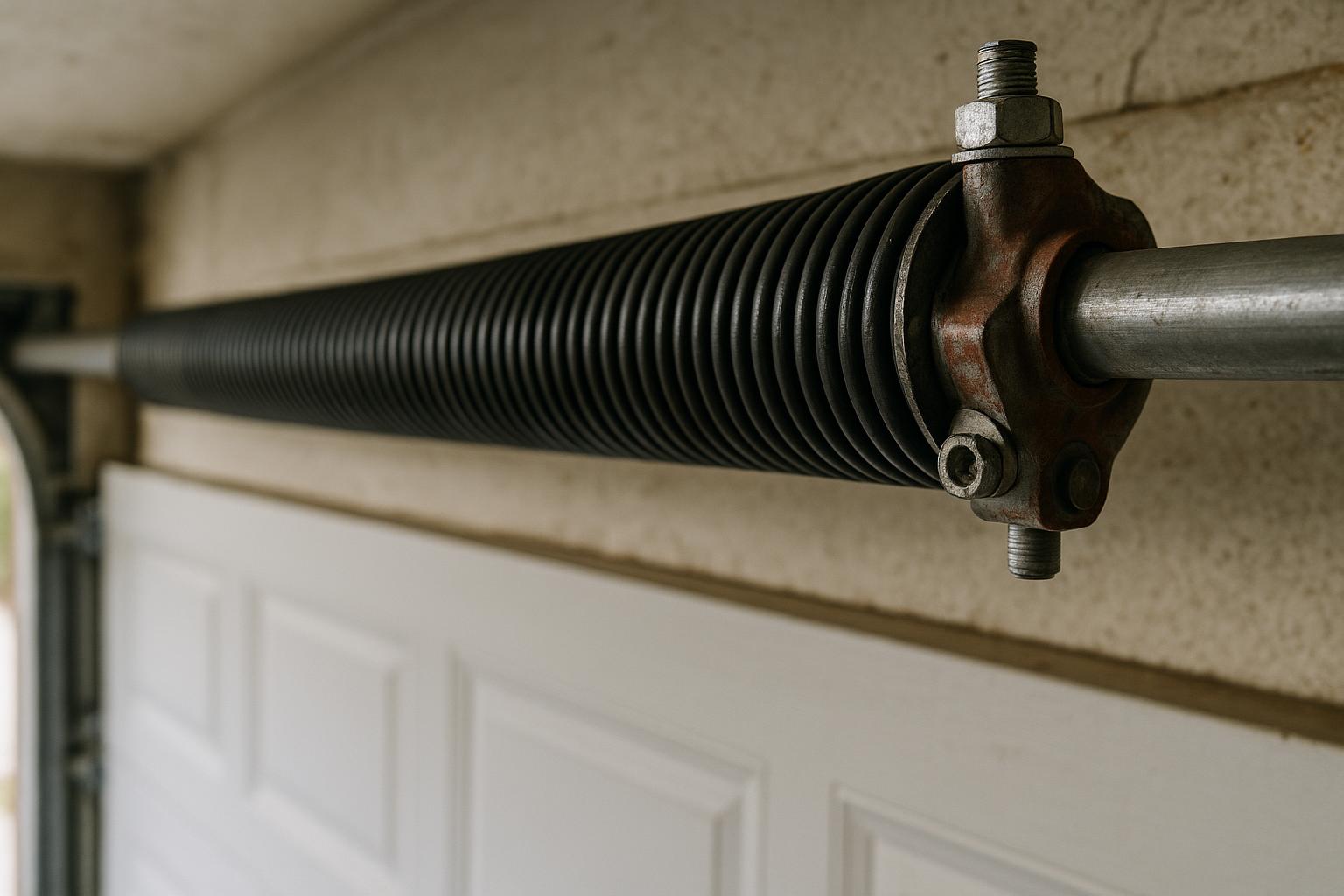
Your Garage Door Springs Are Doing More Work Than You Think
Every time you open or close your garage door, the springs are doing the heavy lifting — literally. A standard two-car garage door can weigh anywhere from 150 to 250 pounds, and it's the springs, not the opener, that bear most of that load. Over time, those springs wear out. And when they fail, your door isn't going anywhere.
For homeowners in Edmond, where we use our garages daily through scorching summers and icy winters, spring wear is something worth paying attention to. Here's what you need to know about garage door spring lifespan, warning signs of failure, and when to schedule a replacement.
How Long Do Garage Door Springs Last?
Most standard garage door springs are rated for approximately 10,000 cycles. One cycle equals one full open and one full close. That sounds like a lot, but it adds up faster than you'd expect.
If your household opens and closes the garage door four times a day — which is pretty typical for a family in Edmond — that's roughly 1,460 cycles per year. At that rate, your springs could wear out in about seven years.
Some factors that affect spring lifespan include:
- Frequency of use: More cycles means faster wear. Families with multiple drivers tend to go through springs sooner.
- Climate and temperature swings: Oklahoma's wide temperature range — from triple-digit heat to below-freezing cold — causes the metal in springs to expand and contract, accelerating fatigue.
- Maintenance history: Springs that are regularly lubricated and inspected tend to last longer than neglected ones.
- Spring quality: Not all springs are created equal. Higher-cycle springs (rated for 20,000 or even 30,000 cycles) are available and can significantly extend the time between replacements.
Torsion Springs vs. Extension Springs
There are two main types of garage door springs, and the type you have affects both how they wear and how they should be replaced.
Torsion Springs
These are mounted on a metal shaft directly above the garage door opening. They use torque to lift the door and are the more common type on modern residential doors. Torsion springs tend to last longer and provide smoother, more balanced operation.
Extension Springs
These run along the horizontal tracks on either side of the door. They stretch and contract to raise and lower the door. Extension springs are more common on older or lighter doors and are generally less expensive, but they can wear unevenly and may pose a safety risk if they snap without a safety cable in place.
If you're not sure which type your garage door uses, a quick visual check will usually tell you — or you can ask during your next maintenance visit.
Warning Signs Your Springs Are Wearing Out
Springs rarely fail without giving some warning first. Here are the most common signs that your garage door springs are nearing the end of their life:
- The door feels heavier than usual: If you disconnect the opener and try to lift the door manually, it should move relatively easily. If it feels like you're deadlifting, the springs are losing tension.
- The door opens unevenly: One side rising faster than the other can indicate that one spring is weaker or has already broken, especially on doors with two torsion springs.
- Visible gaps in the spring coils: A healthy torsion spring has tightly wound coils. If you see a visible gap or separation in the coils, the spring has likely snapped.
- Loud bang from the garage: Many homeowners in Edmond have told us they heard a loud bang — almost like a gunshot — coming from the garage. That's often the sound of a spring breaking under tension.
- The opener struggles or won't lift the door: Your garage door opener is designed to work with the springs. When the springs fail, the opener has to fight the full weight of the door, which can burn out the motor.
- The door slams shut quickly: Without proper spring tension, the door can come down much faster than it should, which is a serious safety hazard.
Can You Replace Garage Door Springs Yourself?
We understand the DIY spirit — it's alive and well here in Edmond. But garage door spring replacement is one of those jobs we strongly recommend leaving to a professional. Here's why:
Torsion springs are under extreme tension. A spring rated to lift a 200-pound door stores a tremendous amount of energy. If it's unwound incorrectly, it can cause serious injury. Emergency rooms see garage door spring injuries every year, and most of them involve homeowners attempting DIY repairs.
Proper tools are required. Spring replacement requires winding bars, vice grips, and precise knowledge of how many turns to apply based on the door's weight and the spring's wire gauge. Using the wrong tools — or the wrong number of turns — can result in a door that's unbalanced, unsafe, or damaging to the opener.
Matching the right spring matters. Springs need to be matched to your specific door's weight, height, and track configuration. Installing the wrong spring can cause premature failure or put stress on other components.
How to Make Your Springs Last Longer
You may not be able to prevent spring failure entirely, but you can extend their lifespan with some basic care:
- Lubricate the springs every few months. A light coat of white lithium grease or silicone-based spray keeps the coils from rusting and reduces friction during operation.
- Schedule an annual tune-up. A professional maintenance visit includes spring inspection, balance testing, and lubrication — all of which help catch problems early.
- Upgrade to high-cycle springs. If you're replacing springs anyway, ask about high-cycle options. They cost a bit more upfront but can last two to three times longer.
- Keep an eye on the door's balance. Once or twice a year, disconnect the opener and manually lift the door halfway. If it stays in place, the springs are balanced. If it falls or rises, it's time for an adjustment.
When to Call for Spring Replacement in Edmond
If you've noticed any of the warning signs above — or if your springs are approaching the seven-to-ten-year mark — it's worth having them inspected. A broken spring isn't just an inconvenience; it can leave your car trapped in the garage, compromise your home's security, and create a genuine safety risk for your family.
At Edmond Door & Opener, we keep the most common residential spring sizes stocked on our trucks, which means most replacements can be completed in a single visit. We'll assess your door, recommend the right spring for your setup, and make sure everything is balanced and operating safely before we leave.
Whether you're in Edmond, Deer Creek, Piedmont, or the surrounding Oklahoma City area, we're here to help. Give us a call, and we'll get your garage door back to working the way it should.